Four Sets of Roadworks, One Choice: Reading Britain's Fibre Free-for-All Before You Sign
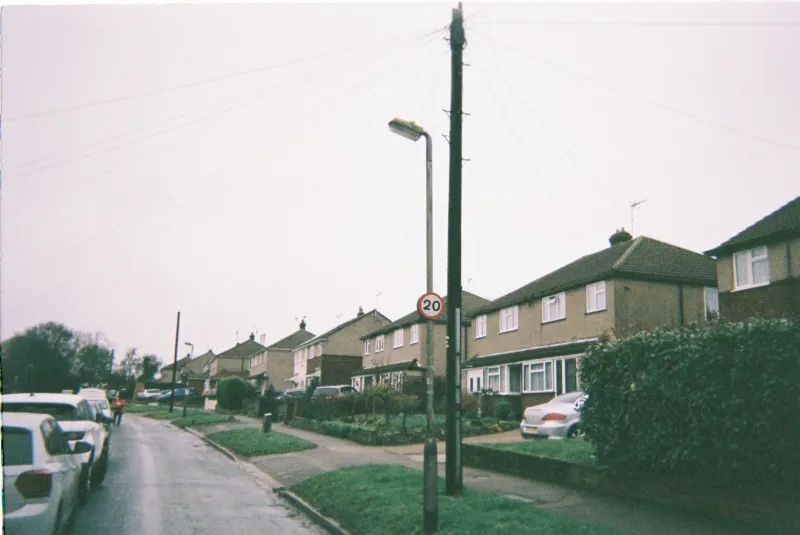
Walk down almost any residential street in a mid-sized British town and you can count the evidence: spray paint on the pavement, a trench reinstated with fresher tarmac, a cabinet with an unfamiliar logo. The country has spent the better part of a decade building full-fibre networks at speed, and in many places it has built them two, three or four times over.
That duplication is not an accident of incompetence. It is the predictable result of a market designed for retail competition being applied to infrastructure that is expensive, slow to build and impossible to un-build. Understanding the mechanics helps households read the marketing that lands on the doormat.
Why the same pavement gets opened repeatedly
For most of the last century, telecoms infrastructure in the UK was effectively a monopoly, then a regulated wholesale business. The alternative network operators — altnets — that emerged from around 2018 onwards were betting that a wholesale-only model could work: build the fibre, sell access to retail brands, and undercut the incumbent on price and speed.
The capital was available, the civil engineering was cheaper than expected in dense urban areas, and planning permission for street works was granted by local authorities with limited scope to coordinate between applicants. Nobody was obliged to ask whether a competitor had already laid duct on that road. Each operator modelled its own addressable market, and each concluded that enough households would switch.
Openreach, meanwhile, was rebuilding its own network to fibre. So was Virgin Media O2's expansion programme. The result is a country where a substantial share of premises can choose between two or more physical fibre networks — a genuinely unusual position internationally, and one bought at considerable cost.
What overbuilding does to prices and service
In the short term, duplication has been excellent for consumers. Where two networks compete, retail prices fall, installs are quick and introductory discounts are aggressive. That is the visible benefit, and it is real.
Underneath it, the economics are harder. A network built to pass 100,000 homes needs a meaningful share of them to buy service. Where a rival already has the street, take-up is lower, the cost per connected customer rises, and the debt used to fund the build looks increasingly heavy. Some operators have responded by consolidating; others have restricted further build; a handful have failed. Build quality can suffer too, since crews are a finite resource and rushed work generates the callbacks that show up later as intermittent faults.
The consolidation is already here
The past few years have seen a steady wave of mergers, acquisitions and wholesale agreements among altnets, alongside retail brands quietly moving onto whichever network offers the best terms. The direction of travel is clear: fewer companies owning physical infrastructure, more companies competing to sell services over it.
For a household, that distinction — network owner versus retail provider — is the one that matters most. The name on your bill is increasingly just a brand buying capacity upstream. The name on the cabinet is the thing that determines whether your connection is fast, stable and likely to still be maintained in 2031.
One Touch Switch, and what it changes
Ofcom's One Touch Switch process, in force since 2023, was designed to remove the friction that made changing provider feel like a negotiation. You contact the new provider, they handle the rest, and you do not need to speak to the company you are leaving. The scheme also brought in automatic compensation when switches go wrong, and rules requiring providers to tell you when your contract ends.
What it does not do is change the physical layer. If you move from a retail brand on one network to a retail brand on another, you are likely to need a new installation and a new router. If you move between two brands that both resell the same underlying network, the switch is largely administrative — quicker, cleaner, and with less disruption. In practice, the retail layer is where genuine choice now lives, and One Touch Switch makes exercising that choice easier than the marketing of five years ago implied. It does not, however, conjure a second network where only one exists.
Judging whether your street's network has a future
A few practical checks will tell you more than any advertising leaflet.
- Identify the network, not just the brand. Ask the sales agent directly whose fibre terminates in your home and whether the provider is the owner or a reseller. If they cannot answer, that is informative.
- Check how many networks pass your postcode. Ofcom's coverage data and the postcode checkers on provider websites will show what is available. Multiple live networks is a good sign for your bargaining position.
- Look at the owner's funding and footprint. A network with a concentrated regional build and a wholesale strategy is a different risk profile from one with a national plan and heavy debt. Public statements about build targets are worth reading sceptically.
- Match contract length to confidence. A 24-month contract with an operator whose network is new to your street carries more risk than a shorter term, even at a slightly higher monthly price. Early termination charges are where the risk lands.
- Ask about resilience, not just speed. Two independent physical routes into a property is a different proposition from one. If the second network is viable, keeping it — even on a cheap standby tariff — is a legitimate hedge.
The reasonable conclusion
Britain has ended up with a duplicated fibre network that is expensive to have built and will not be fully used. Consumers have benefited from the resulting price war, and will continue to benefit as the retail layer consolidates and brands compete on service over shared infrastructure.
The judgment for a household is not whether duplication was sensible in the abstract, but whether the specific network outside the door is well funded, well built and likely to be maintained. Ask whose cable it is. Then decide how long you are prepared to be tied to it.