The Long Goodbye: Buying Smart Home Hardware That Can Outlast Its App
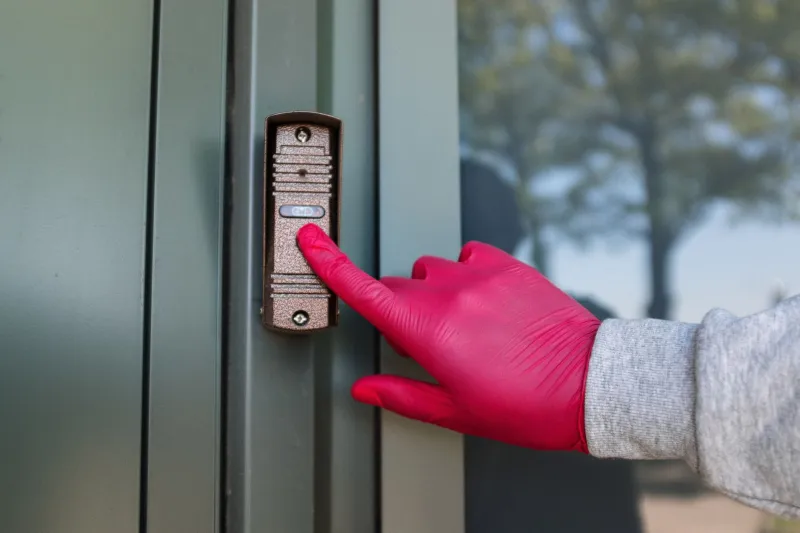
Smart home hardware is often sold as a permanent improvement to the home: a doorbell that sees visitors, a camera that watches a driveway, a hub that coordinates lights and heating. In practice, many of these devices are better understood as physical accessories to a digital service. The plastic, glass and wiring may last for a decade; the app that makes them useful may not.
For UK buyers in 2026, the important question is no longer only whether a device works on the day of installation. It is whether it will still work when the manufacturer changes its cloud platform, withdraws a free tier or decides that an older product is no longer worth supporting. That is a procurement question as much as a technology one.
The specification that rarely appears on the box
Most smart home products are advertised with resolution, battery life, weather resistance and compatibility with voice assistants. Less prominent is the service term: how long the manufacturer intends to keep the companion app, cloud recording and account system running. Some companies publish a minimum support period. Others reserve the right to withdraw features at any time. A few offer local storage or local control as a fallback; many do not.
Before buying, look for four things. First, the subscription terms: which features require payment, how much the plan costs after any introductory period, and whether the device remains usable without it. Second, the end-of-support policy: whether the manufacturer states a support window and what happens afterwards. Third, the data exit route: whether footage, settings and device records can be exported in a usable format. Fourth, the offline mode: whether the doorbell, camera or hub can perform its core function without an internet connection and a manufacturer account.
These details are often buried in support pages and terms of service rather than product listings. That is precisely why they deserve attention before checkout, not after the app has been retired.
What UK consumer law can and cannot do
The Consumer Rights Act 2015 requires goods sold to consumers to be of satisfactory quality, fit for purpose and as described. That protection is valuable if a device is faulty, poorly made or does not do what the seller promised. It is less straightforward when a product continues to function physically but loses the cloud service that made it attractive.
If marketing or terms clearly promised a feature for a defined period, and that promise is not met, a buyer may have grounds to seek a remedy from the retailer. The practical lesson is to keep evidence: product pages, order confirmations, subscription terms and any statements about support. A manufacturer guarantee or extended warranty may add cover, but it is not a general guarantee that an app will run indefinitely. Nor does a one-year warranty usually match the expected lifespan of a doorbell or camera.
For higher-value purchases, UK buyers may also consider the protection offered by credit card providers or chargeback schemes, though these routes depend on the circumstances and are not a substitute for clear pre-purchase checks. The central point is that consumer law can address misleading descriptions and faulty goods; it cannot easily force a company to maintain a free cloud service forever unless that commitment was part of the deal.
A household plan for devices that may lose their app
A sensible approach is to treat smart home devices as a small estate with dependencies. Create a simple register listing each device, its app, the account email address, the subscription cost, the renewal date and the core function it performs. Then mark whether it has a local fallback: a camera that records to a memory card, a hub that controls lights without the cloud, or a doorbell that can at least ring mechanically.
Group devices into three tiers. Critical devices are those tied to safety, security or access; these deserve the strongest support commitments and the clearest exit route. Convenient devices add comfort but can be replaced without disruption. Disposable devices were cheap enough that their loss is annoying rather than costly. The tiering helps a household decide where to spend on longer support and where to accept a shorter service life.
It also helps to test the offline mode periodically. Unplug the router for ten minutes and see what still works. Check whether footage can be downloaded and whether settings can be backed up. Put the subscription renewal date in a calendar with a note about what happens if it is cancelled. These small checks reveal whether a device is genuinely part of the home or merely a tenant of the manufacturer's cloud.
Buying in 2026: questions worth asking
When comparing products, ask the retailer or manufacturer directly about the minimum support period and the consequences of end-of-support. Look for local-first options where they suit the household, and favour devices that use documented standards or local storage over those that depend entirely on a single app. That does not mean every buyer needs a technically complex setup; it means the dependency should be visible before purchase.
Check the returns window and keep the packaging until the device has been tested. Register the product if that secures a longer warranty, but do not confuse registration with a promise of long-term software support. Read recent reviews for signs that an app has been neglected, and check whether the manufacturer has a track record of retiring products abruptly.
The practical conclusion
A smart doorbell or camera is not just a piece of hardware. It is a small, long-term relationship with a software provider. In 2026, UK households should judge that relationship as carefully as they judge the lens, the battery or the build quality. The right device is not necessarily the one with the most features; it is the one whose useful life is described honestly, whose subscription terms are clear and whose core function can survive if the app one day goes dark.