The Local Compute Question: What an AI PC Can Actually Do for a UK Household in 2026
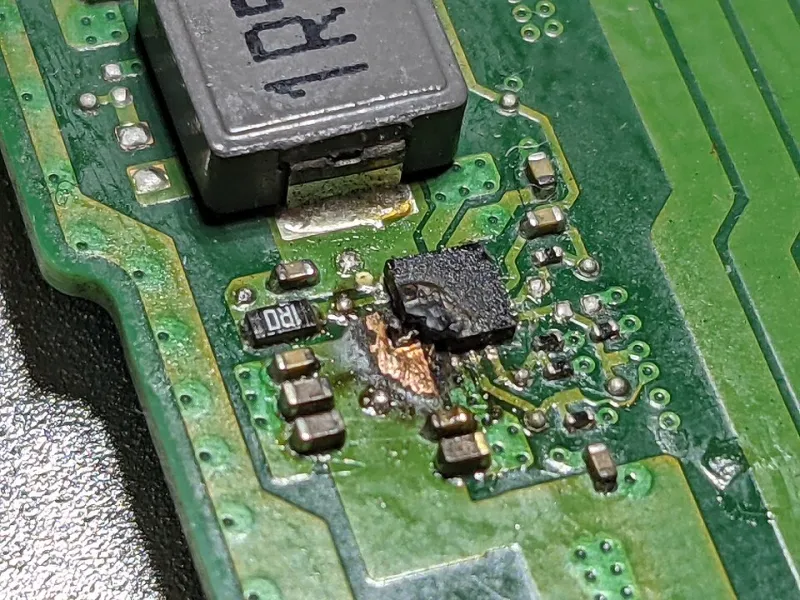
Photo: Profpcde, CC0, via Wikimedia Commons
Walk into a UK electronics retailer this autumn and you will see the same words repeated across laptop displays: AI PC, NPU, and a large number followed by TOPS. The marketing is consistent, but the meaning is not. For a household choosing a machine that may need to last four or five years, the relevant question is not whether a laptop carries an AI badge. It is what the machine can do locally, with the software you actually use, and on what terms you can return it if those claims do not hold.
What an NPU changes, and what it does not
A neural processing unit, or NPU, is a dedicated accelerator for the kind of arithmetic that machine-learning models rely on. It sits alongside the CPU and GPU and is designed to run sustained, relatively low-power AI workloads. That makes it useful for tasks that happen continuously in the background: cleaning up a video call, separating voices, recognising handwriting, or indexing photographs. It does not make a laptop intelligent on its own. The CPU still runs the operating system, the GPU still drives the screen, and the memory system still decides how much model work can happen at once.
TOPS, or tera operations per second, is a peak throughput figure. It is useful for comparing some chips within the same generation and vendor family, but it is not a buying decision on its own. Vendors measure and qualify TOPS differently, and the figure says little about memory bandwidth, thermal limits, battery drain, or whether any application has been written to use the accelerator. A high TOPS number on a sticker can sit beside a laptop that rarely invokes the NPU in everyday software.
There is also no legal definition of an AI PC in UK consumer law. The phrase is a marketing label, not a guaranteed specification. A buyer should treat it as a prompt to ask questions, not as a substitute for reading the specification sheet.
From badge to workload
The most credible local AI features are modest and repetitive. Live transcription and captions can be useful in meetings, lectures and accessibility settings. Local photo search can help a household find images by object or place without uploading a library. Background blur, voice isolation and noise suppression are mature enough to work in common video-call software. Some laptops can summarise a locally stored document or translate short passages offline, but these features are uneven across applications and regions.
Many headline demonstrations still rely on cloud services. A Copilot feature, an Adobe tool or a note-taking assistant may require a Microsoft account, an active subscription and an internet connection. That does not make it useless, but it changes the privacy and cost calculation. UK buyers should look for an offline mode, a clear statement of where processing happens, and a list of supported languages. Features that work only in US English at launch, or only with selected accounts, should be treated as future promises rather than present capabilities.
Microsoft's Copilot+ PC programme has pushed local silicon into the mainstream, while Apple, Qualcomm, AMD and Intel have all made their own claims. The practical test is the same across brands: open the app you intend to use, disconnect from Wi-Fi, and see what still works. If a retailer will not permit that test, the return window becomes part of the product.
Privacy is architectural, not a sticker
Local processing can reduce the amount of personal data leaving a device, but it does not guarantee privacy. An application may process a transcript on the laptop and then sync it to a cloud account. A photo index may be local while the search query is logged. Screen-history features, which capture snapshots of activity for later retrieval, deserve particular attention in shared households. They should be opt-in, clearly explained, encrypted and easy to pause.
The Information Commissioner's Office has been clear that organisations must be transparent about how personal data is used, and that principle is a useful consumer lens. Ask who controls the data, where it is stored, how long it is retained and whether the feature can be switched off without breaking the device. Local compute is a genuine privacy advantage only when the whole workflow stays local.
Battery, heat and the quiet costs
An NPU is efficient at the workloads it is designed for, but it is not a battery life guarantee. The screen, memory, storage and CPU still dominate power draw. A laptop with a large NPU and a small battery may run for less time than a conventional machine with a better display panel and a more efficient platform. Buyers should look at watt-hours, charger size, weight and independent battery tests rather than assuming AI silicon equals all-day endurance.
Heat is the other quiet cost. Thin laptops that run sustained AI workloads may fan up or throttle. For a household machine used for video calls, photo management and office work, a calm chassis and a comfortable keyboard matter more than a peak benchmark.
Software support and the return route
Before buying, check the support horizon. How long will the manufacturer provide driver and firmware updates? Which version of Windows or macOS will the machine receive, and for how many years? Does the NPU have a documented software stack, or is it waiting for developers? A laptop bought in 2026 should have a credible update path beyond the next major software release.
UK distance buyers generally have 14 days to cancel under the Consumer Contracts Regulations, but the return route is not the same as a warranty. Check restocking fees, sealed-box conditions and software activation rules before ordering. If a retailer advertises a local AI feature that does not work as described, the goods may not match the description under the Consumer Rights Act 2015. Keep the listing, the order confirmation and any chat transcript. A screenshot of the claim is cheaper than an argument later.
A buyer's checklist
- Identify two or three local tasks you will actually use, such as transcription, photo search or call noise suppression.
- Ask whether each task runs offline and whether it requires an account or subscription.
- Check the supported languages and UK availability at the point of sale.
- Compare memory and storage before TOPS; local models need room to run.
- Look for independent battery and thermal tests, not just peak silicon figures.
- Confirm the operating system and driver support period in writing.
- Read the returns policy, including software activation and restocking terms.
- Test the feature inside the return window and keep evidence of the advertised claim.
The AI PC is not a con, but it is not a shortcut either. In 2026, the sensible UK buyer treats the NPU as one component among many, asks what runs locally today, and keeps the receipt close until the software has proved itself.